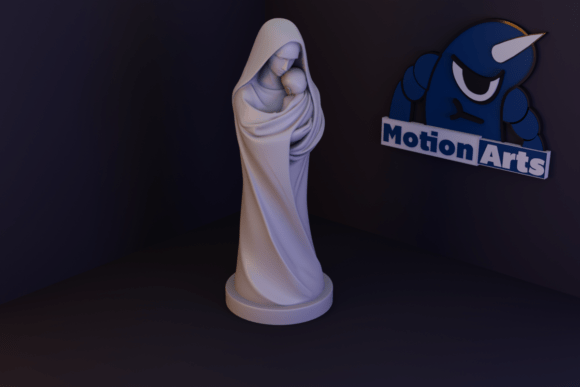
Virgin Mary with Baby Jesus: 3D Sculpture Evaluation
The Virgin Mary with Baby Jesus, often referred to in art history as the "Madonna and Child," represents one of the most enduring and recognizable themes in religious iconography. In the context of modern digital fabrication, this theme has evolved into a specific category of 3D models for printing. These digital files allow individuals to create physical sculptures that capture the traditional essence of maternal tenderness, protection, and spirituality. The specific design described here features a figure where the mother gently tilts her head toward the child, enveloped in a long, flowing mantle that descends to a circular base. Understanding the nuances of this specific model is essential for anyone considering it for home altars, religious decoration, or personal collection.
Understanding the Design and Artistic Intent
The core appeal of this Virgin Mary with Baby Jesus sculpture lies in its composition and symbolic depth. Unlike abstract representations, this model focuses on a moment of quiet contemplation. The mother's posture, holding the baby close to her chest, reinforces feelings of warmth and security. The flowing mantle is not merely decorative; it serves a structural purpose in the 3D design, creating elegant folds that add visual weight and stability to the piece.
From a technical standpoint, the model was developed with the constraints and capabilities of Fused Deposition Modeling (FDM) 3D printing in mind. The continuous volumes and well-balanced structural distribution are critical features. The integrated base ensures the sculpture stands firmly, while the fabric folds help distribute stress during the printing process. This balance between artistic refinement and engineering practicality makes it a viable option for hobbyists and creators alike.
Reasons to Consider This Model
Several factors might lead an individual to select this specific Virgin Mary with Baby Jesus 3D model over other options:
- Spiritual Significance: For those seeking to enhance a home altar or create a focal point for prayer, the traditional imagery provides immediate spiritual resonance. The depiction of tenderness aligns with devotional practices centered on maternal love and protection.
- Customization Potential: As a 3D printable file, the model allows for customization in size, material, and finish. Users can print the sculpture in PLA, PETG, resin, or even cast it in metal or plaster, depending on their desired aesthetic and durability requirements.
- Educational Value: For students of art history or theology, printing this model offers a tangible way to study the proportions, drapery, and emotional expression found in classical religious sculpture.
- Cost-Effectiveness: Compared to purchasing a professionally carved stone or bronze statue, the cost of materials for a 3D printed version is significantly lower, making high-quality religious art accessible to a wider audience.
Benefits and Tradeoffs
Evaluating the benefits of this Virgin Mary with Baby Jesus sculpture requires a balanced view of its advantages against potential limitations.
The primary benefit is the structural integrity designed into the file. The description notes that the folds of the fabric and the integrated base ensure stability. This reduces the likelihood of warping or breaking during the printing process, which is a common issue with delicate figurines. Furthermore, the "Beginner" difficulty level suggests that the geometry is forgiving, making it suitable for users who are new to 3D printing but wish to produce a refined result.
However, there are tradeoffs to consider. The requirement for supports is explicitly stated. While necessary for the overhangs created by the mantle and the positioning of the child, support structures add time to the print duration and require post-processing. Removing supports from intricate areas like the face or the folds of the robe demands patience and fine tools. Additionally, the final surface texture will depend heavily on the printer's resolution and the user's finishing skills. A raw print may show layer lines that detract from the "serenity and delicacy" intended by the design, necessitating sanding and painting to achieve a museum-quality look.
Practical Considerations for Printing
Before committing to this project, potential users should assess their equipment and skill set. Although labeled as a "Beginner" level model, achieving the described elegance requires attention to detail.
- Support Strategy: Since supports are required, users must configure their slicing software carefully. Placing supports in hidden areas, such as underneath the heavy folds of the mantle, can minimize visible marks on the final sculpture.
- Material Selection: To convey the "softness" of the fabric and the skin tones, materials like matte PLA or resins that accept paint well are recommended. Glossy materials might reflect light in a way that highlights imperfections rather than the form.
- Scale and Orientation: The model's stability relies on the circular base. Printing at a scale that is too small might compromise the detail of the faces, while printing too large could increase the risk of failure if the printer bed is not perfectly leveled.
When This Model is a Strong Fit
This Virgin Mary with Baby Jesus sculpture is an ideal choice for specific scenarios:
- Home Altar Creation: Individuals looking to build a dedicated space for reflection will find the integrated base and stable design perfect for display on a shelf or table.
- Gift Giving: For special occasions such as baptisms, confirmations, or Christmas, a custom-printed and painted version of this sculpture serves as a meaningful, personalized gift.
- Hobbyist Projects: Makers looking to practice support removal and post-processing techniques will find the complex drapery of the mantle an excellent challenge without being overly frustrating.
When Alternatives May Be Worth Considering
Despite its merits, this model may not be the best fit for every situation. Alternatives should be considered if:
- Time is Limited: If the user cannot dedicate time to removing supports and sanding the intricate folds, a pre-finished commercial statue might be more appropriate.
- High Durability is Required: For outdoor use or high-traffic areas, standard PLA prints may degrade due to UV exposure or impact. In these cases, casting the design in durable materials like concrete or metal, or purchasing a weather-resistant commercial alternative, would be wiser.
- Advanced Detail is Needed: If the goal is hyper-realism comparable to professional gallery pieces, a standard FDM print might lack the necessary resolution. Using a high-end SLA (resin) printer or commissioning a professional artist might yield better results.
Decision-Making Insights
Ultimately, the decision to utilize this Virgin Mary with Baby Jesus 3D model depends on aligning the project goals with available resources. If the objective is to engage with the creative process of bringing a sacred image to life, the rewards of printing and finishing this sculpture outweigh the effort involved. The design successfully bridges the gap between spiritual symbolism and digital manufacturing, offering a platform for both devotion and craftsmanship.
For those prioritizing convenience over the hands-on experience, ready-made statues remain a valid alternative. However, for the creator willing to invest time in support removal and finishing, this model offers a unique opportunity to possess a piece of art that is both personally crafted and deeply symbolic. By understanding the requirements—specifically the need for supports and post-processing—users can manage their expectations and achieve a result that honors the serenity and elegance of the original inspiration.