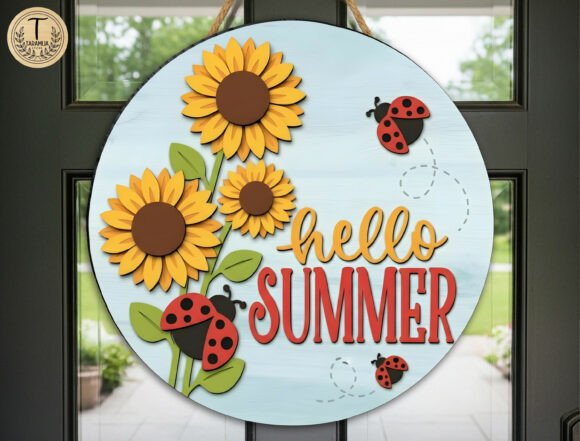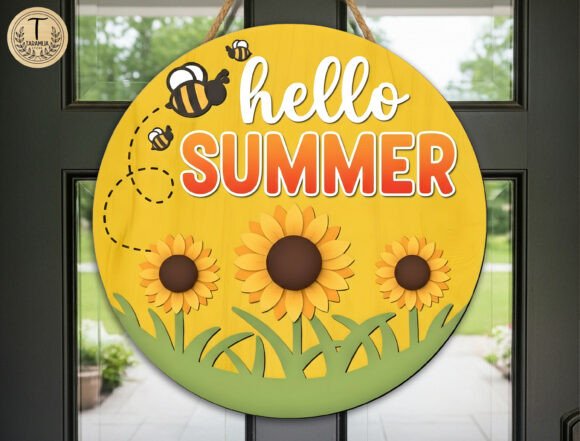
Summer Door Hanger Laser Cut File SVG Evaluation
For crafters and DIY enthusiasts looking to update their seasonal decor, digital design files have become a primary resource. Among the various options available for summer-themed projects, the Summer Door Hanger Laser Cut File SVG stands out as a specific tool designed for creating dimensional, layered signage. This type of file is not merely an image but a set of vector instructions that guide cutting machines to produce physical objects with precision. Understanding the capabilities, limitations, and practical applications of this specific design format is essential for anyone considering it for home decoration or small-scale production.
Understanding the Summer Door Hanger Laser Cut File SVG
A Summer Door Hanger Laser Cut File SVG is a digital blueprint used in conjunction with computer-controlled cutting equipment. Unlike standard raster images (such as JPEGs or PNGs) which are made of pixels, Scalable Vector Graphics (SVG) use mathematical equations to define lines and shapes. This distinction is critical for laser cutting and CNC operations because it allows the machine to follow exact paths without losing resolution, regardless of the size of the final cut.
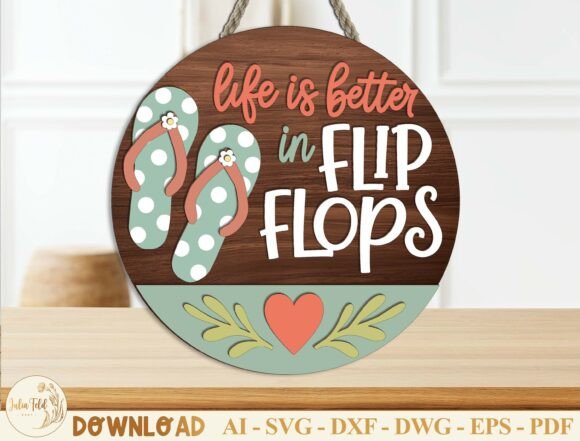
The specific design in question features a round sign style with the phrase "Life Is Better In Flip Flops." The file structure includes multiple layers intended to be stacked, creating a three-dimensional effect. These layers typically incorporate elements such as polka dot patterns on flip flops, tropical color zones, and rustic wood textures simulated through layering. The file package usually includes various formats like DXF, DWG, AI, and EPS, ensuring compatibility with different software suites and hardware brands, including Glowforge, Cricut, and xTool machines.
Reasons for Interest in Layered Summer Designs
Several factors drive interest in this specific type of digital asset. First, the demand for personalized home decor has surged, with many homeowners seeking unique items that reflect their personal style rather than mass-produced goods found in big-box stores. A layered door hanger offers a level of customization that pre-made signs cannot match. Crafters can choose their own materials, paint colors, and finishes, resulting in a one-of-a-kind piece.
Secondly, the "layered" aspect of the design appeals to those interested in advanced crafting techniques. By stacking different pieces of material, creators can achieve depth and shadow play that flat decals lack. This 3D effect adds a professional touch to handmade items, making them suitable for gifting or even resale. The beachy theme, featuring flip flops and coastal typography, specifically targets the seasonal market, allowing users to refresh their entryways quickly as the weather warms up.
Benefits and Practical Advantages
The primary benefit of using a Summer Door Hanger Laser Cut File SVG is efficiency. Once the file is loaded into compatible software, the cutting process is automated and precise. Clean cut lines ensure that intricate details, such as the straps of the flip flops or the edges of the text, are rendered accurately. This precision reduces material waste and minimizes the need for post-cut sanding or finishing.
Another significant advantage is versatility. Because the design is provided in multiple formats (SVG, AI, PDF, DXF), it accommodates a wide range of tools. Whether a user owns a high-end laser cutter or a vinyl cutter capable of weeding, the file can be adapted. Furthermore, the beginner-friendly nature of the design means that complex assembly is not required; the layers are designed to fit together logically, often requiring simple glue application to complete the stack.
From a creative standpoint, the design serves as a strong foundation for experimentation. While the file provides the shape, the crafter controls the aesthetic outcome. One might use reclaimed wood for a rustic look, acrylic for a modern finish, or MDF for a painted, matte appearance. This flexibility allows the same digital file to serve different interior design styles, from coastal cottage to contemporary minimalism.
Tradeoffs and Considerations
While the benefits are clear, there are tradeoffs to consider before purchasing or downloading this file. The most obvious requirement is access to specialized equipment. You cannot physically create this door hanger without a laser cutter, CNC router, or a compatible die-cutting machine. For individuals without these tools, the file is useless unless they have access to a local makerspace or a print-and-cut service.
Additionally, the "layered" design implies a higher consumption of materials compared to a single-layer cut. To achieve the 3D effect, you must cut each distinct layer separately, which increases both material costs and machine runtime. If the project is intended for commercial resale, these added costs must be factored into the pricing strategy to ensure profitability.
There is also a learning curve associated with assembling layered signs. While the file itself may be easy to cut, aligning the layers perfectly during the gluing process requires patience and a steady hand. Misalignment can ruin the visual appeal of the "Life Is Better In Flip Flops" message. Beginners should expect to practice with scrap material before committing to expensive substrates like hardwood or acrylic.
Ideal Situations for Use
This design is a strong fit for several specific scenarios. It is ideal for homeowners who enjoy DIY projects and want to add a personalized touch to their front porch or vacation rental property. The cheerful, relaxed theme makes it particularly effective for beach houses, poolside cabanas, or any space aiming for a coastal vibe.
It is also well-suited for small business owners who sell handmade crafts at markets or online platforms like Etsy. The professional look of the layered design can command a higher price point than flat cutouts. Since the file includes multiple formats, sellers can easily scale production by adjusting settings for different machines or batch processing orders.
Furthermore, this file is excellent for gift-giving. Creating a custom door hanger for a friend who loves the beach or is moving into a new summer home demonstrates thoughtfulness and effort. The ability to customize the colors and materials ensures the gift feels tailored to the recipient's taste.
When to Consider Alternatives
Despite its advantages, there are situations where alternatives may be more appropriate. If a crafter does not own a laser cutter or CNC machine and lacks the budget to rent one, purchasing a ready-made door hanger is a more practical choice. The time and cost involved in setting up a cutting session for a single item may outweigh the benefits of customization.
Similarly, if the goal is to produce a very large volume of identical items quickly, a pre-manufactured solution might be more efficient. While the SVG file allows for automation, the manual assembly and painting steps inherent in a layered design can become a bottleneck in high-volume production. In such cases, injection-molded or pre-painted signs might offer better economies of scale.
Finally, if the desired aesthetic is strictly flat or minimalist, a layered 3D sign may be overkill. Some interior design styles favor sleek, two-dimensional graphics. In these instances, a simple vinyl decal or a single-layer wood cutout would be more stylistically consistent and require less material and assembly time.
Decision-Making Insights
Before deciding to utilize the Summer Door Hanger Laser Cut File SVG, potential users should evaluate their current resources against the project requirements. Ask yourself: Do I have the necessary cutting equipment? Do I have the time to assemble and finish multiple layers? Is the aesthetic value of a 3D layered sign worth the additional material cost?
If the answer to these questions is yes, then this file represents a valuable asset for creating high-quality, seasonal decor. It bridges the gap between digital design and tangible craftsmanship, offering a structured yet flexible approach to summer decorating. However, if the barriers to entry—equipment, time, or skill—are too high, exploring pre-made options or simpler single-layer designs may be a more satisfying path forward. Ultimately, the decision should rest on how well the project aligns with your crafting goals and the specific needs of your home or business.