Hiking Mileage Tracker Sign Laser Cut: A Practical Guide to Implementation
For outdoor enthusiasts, the journey is often as significant as the destination. However, maintaining momentum toward annual fitness or exploration goals requires a tangible system of accountability. The Hiking Mileage Tracker Sign Laser Cut serves as more than just a decorative piece; it is a functional tool designed to visualize progress and motivate consistent activity. Unlike standard digital counters that disappear behind a screen, this physical tracker integrates into the home environment, offering a constant visual reminder of achievements. This guide explores how to effectively integrate this digital design into your creative workflow, manufacturing process, and personal goal-setting routine.
Understanding the Digital Asset and Its Role in Your Workflow
The foundation of this project lies in understanding that you are purchasing a digital download. No physical item will be shipped. Instead, you receive a suite of high-quality vector files including SVG, DXF, AI, EPS, PDF, and DWG formats. This distinction is critical for planning your production timeline. Whether you are a hobbyist with a desktop cutter or a small business owner operating a laser engraving machine, the workflow begins with file management rather than assembly.
In a broader creative process, this asset fits into the "design-to-production" phase. Before any cutting occurs, the user must evaluate their specific hardware capabilities against the provided file formats. The versatility of the included formats ensures compatibility across a wide spectrum of tools. For instance, if you utilize a Glowforge, xTool, OMTech, or Thunder Laser, the DXF and SVG files provide the necessary vector paths for precise cutting. If your workflow involves CNC routers, the DWG and DXF files offer the structural data required for milling wood or acrylic. Even for users relying on Silhouette Designer Edition or Cricut machines, the SVG format ensures scalability without loss of resolution.
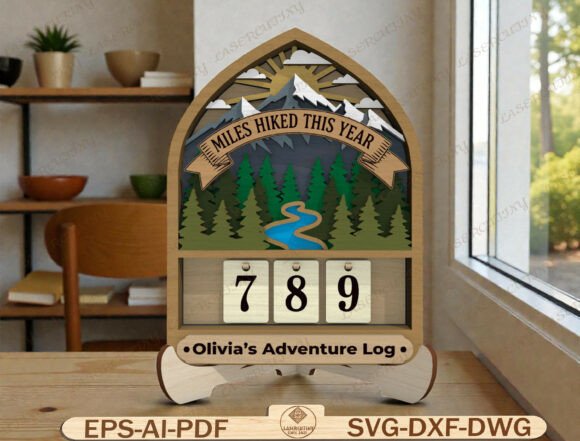
This digital-first approach allows for immediate customization. You can adjust the scale of the mountain landscape, modify the forest tree density, or alter the river detail before sending the job to the machine. This flexibility is essential for ensuring the final product fits your specific display space, whether it is a mantlepiece, an office wall, or a community center bulletin board.
Preparing for Production: Compatibility and Material Selection
Successful implementation of a Hiking Mileage Tracker Sign Laser Cut project requires careful preparation regarding materials and machine settings. The design features a scenic mountain landscape, forest trees, and a river detail, all intended to create a stunning 3D display when assembled. To achieve this depth, material selection is paramount. While the design is compatible with various substrates, plywood, birch veneer, or basswood are recommended for their ability to hold fine details and withstand repeated handling of the interchangeable number tiles.
When preparing the file for your specific machine, consider the kerf—the width of the material removed by the laser or blade. If you are using a laser cutter, the kerf is minimal but present. In your software, you may need to offset the vector lines slightly to ensure the number tiles fit snugly into their designated slots without being too tight or too loose. This step is a crucial part of quality control. Testing a single tile on scrap material before cutting the entire sign saves time and resources.
Furthermore, the interchangeability of the number tiles adds a layer of complexity to the design logic. Each tile must be cut with precision to ensure they slide smoothly into the frame throughout the year. If you are producing this for a client or selling it as a finished product, consistency in fit is a primary indicator of professional craftsmanship. The digital nature of the files allows you to run test cuts repeatedly until the tolerances are perfect, ensuring that every unit produced meets high standards of usability.
Integrating the Tracker into Personal and Business Goals
Beyond the technical execution, the true value of this tracker emerges during its usage phase. For individuals, placing the completed sign in a visible location transforms abstract mileage goals into a concrete visual metric. This aligns with behavioral psychology principles where visual cues reinforce habit formation. Seeing the numbers change after each hike provides immediate positive reinforcement, encouraging further activity.
For small business owners, creators, or marketers, this project represents an opportunity to engage with a niche audience. Outdoor-loving families, campers, backpackers, and professionals seeking work-life balance are actively looking for ways to track their wellness metrics. By offering this Hiking Mileage Tracker Sign Laser Cut as a custom service or a finished product, you address a specific market need. The workflow here shifts from personal use to product development. You might package the digital files as a DIY kit for crafters who enjoy assembling projects, or you could manufacture the signs as ready-to-hang decor.
In a business context, the design's modularity allows for branding opportunities. You can incorporate logos, specific trail names, or personalized messages into the empty spaces of the design using the same vector editing tools used for the initial layout. This adaptability makes the asset valuable for corporate retreats, outdoor clubs, or educational programs focused on environmental stewardship. The ability to customize the output directly from the source files streamlines the production process, reducing the time between concept and delivery.
Workflow Optimization and Long-Term Usability
To maximize efficiency, organize your digital assets immediately upon download. Create a dedicated folder structure containing the raw vector files, modified versions for different materials, and documentation of successful machine settings. This organization prevents confusion during future production runs or if you need to reproduce a sign for a replacement part. Consistency in file naming and version control is essential for maintaining a smooth workflow, especially if you manage multiple projects simultaneously.
Long-term usability depends on the durability of the materials and the finish applied. After cutting and assembling the sign, applying a sealant or clear coat protects the wood from moisture and UV damage, which is particularly important if the sign will be displayed near windows. The interchangeable number tiles should be handled gently to prevent chipping. Educating end-users on proper care extends the lifespan of the product, ensuring it remains a functional tracker for years.
Additionally, consider the seasonal aspect of hiking. In regions with harsh winters, the tracker may serve as a motivational tool for indoor training or planning future expeditions. The design's aesthetic appeal ensures it remains attractive even when not actively being updated. This dual function—active tracking and passive decoration—enhances its value proposition. It becomes a permanent fixture in the home that celebrates a lifestyle rather than just a temporary chart.
Strategic Implementation for Creators and Hobbyists
For freelancers and entrepreneurs, integrating this design into a portfolio demonstrates technical proficiency and an understanding of market trends. The process of taking a digital file, optimizing it for a specific laser cutter, and assembling a complex 3D object showcases skills in design, engineering, and craftsmanship. Documenting this process through photos or videos can also serve as marketing content, attracting clients who value transparency and quality.
When working with clients, clear communication about the digital nature of the product is essential. Ensure that expectations regarding shipping times, material choices, and assembly requirements are set early in the consultation phase. Providing a preview of the design in the client's preferred dimensions helps avoid misunderstandings. The flexibility of the SVG and DXF formats allows you to make real-time adjustments based on client feedback, fostering a collaborative relationship.
Ultimately, the Hiking Mileage Tracker Sign Laser Cut is a versatile tool that bridges the gap between digital design and physical reality. Whether used to track personal milestones or sold as a premium product, its success relies on a structured approach to file management, material selection, and quality control. By adhering to best practices in preparation and execution, users can ensure that the final result is not only visually stunning but also functionally robust, serving as a lasting testament to their adventures on the trail.