Cozy Isometric Room Miniature 3D Print: A Strategic Asset for Creators and Planners
In the intersection of digital design and physical craftsmanship, the Cozy Isometric Room Miniature 3D Print represents more than a simple decorative object. For entrepreneurs, educators, and creative professionals, this specific model serves as a tangible anchor for planning, branding, and visual communication. The design, characterized by its warm wooden interior and clean isometric layout, draws heavily from the aesthetic language of classic life-simulation games. However, its utility extends far beyond nostalgia. When approached with intentionality, this miniature scene becomes a versatile tool for enhancing productivity, refining spatial reasoning, and creating high-impact visual assets for marketing or educational purposes.
The strategic value of integrating a Cozy Isometric Room Miniature – 3D Printable STL into your workflow lies in its ability to bridge the gap between abstract concepts and concrete reality. Whether you are a small business owner looking to create unique product displays, an educator designing immersive learning environments, or a content creator seeking distinctive backdrops, the decision to utilize this model should be grounded in clear objectives. It is not merely about printing an object; it is about leveraging a well-optimized geometry to support broader operational goals.
Defining the Strategic Utility of Isometric Miniatures
Understanding what a Cozy Isometric Room Miniature 3D Print offers requires looking past the surface-level appeal of "cozy" aesthetics. The isometric perspective is a powerful visual shorthand used in game design and architectural visualization to convey depth and spatial relationships without distortion. By translating this digital concept into a physical form, creators gain a three-dimensional reference point that can significantly aid in decision-making processes related to layout, scale, and composition.
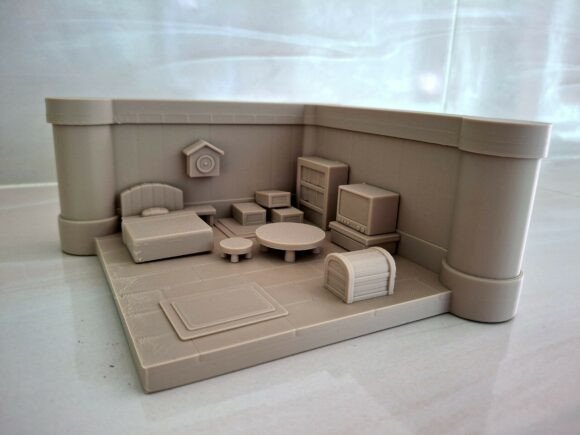
For professionals in branding and operations, the consistency of the model's design—featuring a bed, table, bookshelf, TV, storage boxes, and chest—provides a standardized environment. This standardization is crucial when testing how products interact with a setting or when creating consistent visual narratives across multiple platforms. The smooth surfaces and balanced proportions ensure that the final output is reliable, reducing the friction often associated with complex 3D printing projects. This reliability allows teams to focus on strategy rather than troubleshooting print failures.
Enhancing Visual Communication and Brand Positioning
In a crowded marketplace, distinct visual identity is a competitive advantage. A Cozy Isometric Room Miniature 3D Print can serve as a unique prop for product photography, video content, or live demonstrations. The nostalgic, pixel-style inspiration resonates deeply with audiences aged 20 to 50, many of whom grew up with these visual tropes. Incorporating this aesthetic into your brand materials signals creativity, attention to detail, and a connection to community-driven culture.
Consider the application in e-commerce. Instead of generic white backgrounds, placing a product within a printed diorama creates an immediate narrative context. A desk accessory placed next to the miniature bookshelf or a tech gadget resting on the tiny table tells a story of usage and lifestyle. This contextual storytelling can improve customer engagement and conversion rates by making the product feel more integrated into a relatable, cozy environment. The key is to use the miniature not just as decoration, but as a deliberate stage for your primary offering.
Operational Efficiency and Workflow Integration
One of the most significant advantages of this specific STL file is its optimization for FDM printers. The design eliminates the need for supports, a feature that drastically reduces post-processing time and material waste. For businesses managing tight production schedules or individuals balancing multiple projects, this efficiency is a critical factor. The ability to print the model reliably without extensive cleanup means faster turnaround times from concept to physical asset.
However, efficiency must be paired with proper preparation. The model structure combines several objects into sets to streamline the slicing process. To maintain control over the final outcome, users must understand how to manipulate these grouped files. Utilizing features like "Split to Objects" in slicers such as Bambu Studio allows for granular adjustments. This capability is essential for scaling individual components to fit specific display cases or modifying the arrangement to suit a particular narrative. Without this technical understanding, the potential of the Cozy Isometric Room Miniature 3D Print remains underutilized.
Scaling for Impact: From Desk Decor to Large-Scale Dioramas
The scalability of the model offers flexibility in deployment. A small-scale version might serve as a personal desk organizer or a focal point for a home office, subtly reinforcing a creative atmosphere. Conversely, scaling the model up allows it to function as a centerpiece for trade show booths, museum exhibits, or large-scale educational installations. The decision on size should be driven by the intended viewing distance and the role the miniature plays in the overall environment.
When planning for larger scales, consider the structural integrity of the prints. While the geometry is optimized, increasing the size may require adjustments to infill density or layer height to prevent warping or sagging on overhangs. Strategic planning involves testing smaller prototypes before committing to full-scale production runs. This iterative approach ensures that the final result maintains the clean angles and well-balanced composition that define the original design.
Risks of Unintentional Implementation
Despite its versatility, relying on a Cozy Isometric Room Miniature 3D Print without a clear strategy can lead to wasted resources and missed opportunities. The risk lies in treating the model as a novelty item rather than a functional asset. Printing the model simply because it looks appealing, without considering how it integrates into your existing workflow or brand identity, results in clutter rather than value.
Furthermore, there is a risk of aesthetic mismatch. The warm wooden interior and nostalgic style are specific choices. If your brand identity relies on sleek, modern minimalism or industrial harshness, introducing a cozy, pixel-inspired room could create cognitive dissonance for your audience. Before committing to the project, evaluate whether the visual language of the miniature aligns with your long-term positioning goals. Consistency in visual communication is paramount for building trust and recognition.
Another potential pitfall is neglecting the customization phase. The model comes pre-grouped, which is efficient but limiting if left unmodified. Failing to separate objects for independent resizing can result in awkward proportions where certain elements dominate the scene while others become insignificant. Intentional use requires taking the time to deconstruct the file, adjust scales, and reassemble the scene to perfectly match your vision.
Strategic Planning for Long-Term Value
To maximize the return on investment for this project, approach the Cozy Isometric Room Miniature 3D Print as part of a broader content or operational strategy. Begin by defining the primary goal: Is it to enhance a workspace, create marketing assets, or facilitate an educational lesson? Once the objective is clear, map out the necessary steps for customization, printing, and integration.
For educators and trainers, the model can be a powerful tool for teaching spatial awareness, interior design principles, or even historical contexts depending on how the furniture is arranged. By allowing students to physically manipulate the scene, learning becomes an active, tactile experience rather than a passive observation. In this context, the durability and ease of printing make it a sustainable resource for repeated classroom use.
For freelancers and content creators, the model offers a low-cost method to produce high-quality visual assets. Instead of investing thousands in studio setups, a single print job can provide a reusable backdrop for countless photoshoots. The key is to treat the miniature as a professional tool. Invest in appropriate lighting and camera settings to capture the details of the smooth surfaces and wooden textures effectively. The resulting images can elevate the perceived value of your portfolio or product line.
Decision-Making Framework for Adoption
Before proceeding with the Cozy Isometric Room Miniature – 3D Printable STL, ask yourself the following strategic questions:
- Alignment: Does the aesthetic of the room support my current brand identity or project theme?
- Utility: Will this model solve a specific problem, such as lack of visual interest or inefficient workspace organization?
- Scalability: Do I have the capacity to customize and scale the model to meet future needs?
- Resource Allocation: Is the time spent slicing, printing, and post-processing justified by the expected outcome?
If the answers indicate a strong alignment with your goals, then the project is a sound investment. If the answers are uncertain, reconsider the scope or explore alternative solutions that better fit your immediate requirements.
Conclusion: Intentionality Drives Results
The Cozy Isometric Room Miniature 3D Print is a sophisticated tool disguised as a charming decoration. Its true power emerges when it is deployed with purpose, serving as a catalyst for creativity, a enhancer of communication, or a streamliner of operations. By understanding its technical capabilities and aligning them with strategic objectives, professionals can transform a simple STL file into a valuable asset that drives meaningful results. Avoid the trap of random adoption; instead, plan, customize, and integrate this model intentionally to unlock its full potential in your creative or professional journey.